
Technology
What is inside
Two paddles, two very different cores, one carbon face. Here is what each material is doing and why we chose it.
Foam and honeycomb do different jobs
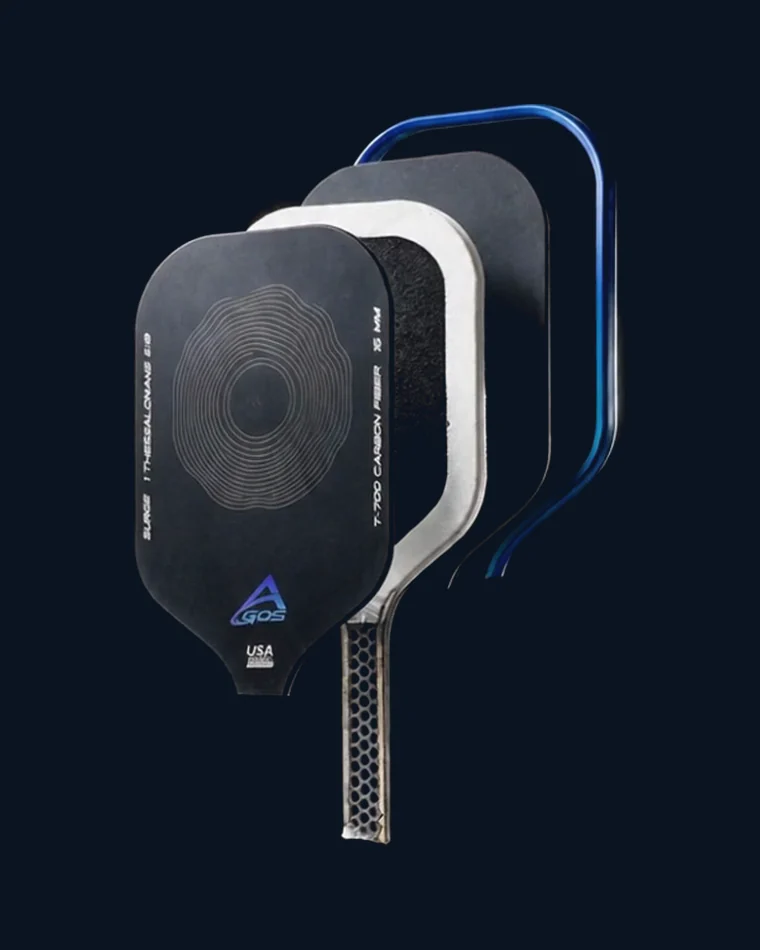
Surge · EPP foam core
Expanded polypropylene, 16 mm, run edge to edge with an EVA foam perimeter. Foam spreads energy across a broader area than a celled core, which is what lets us tune a defined sweet spot rather than accept whatever the cell geometry gives us.
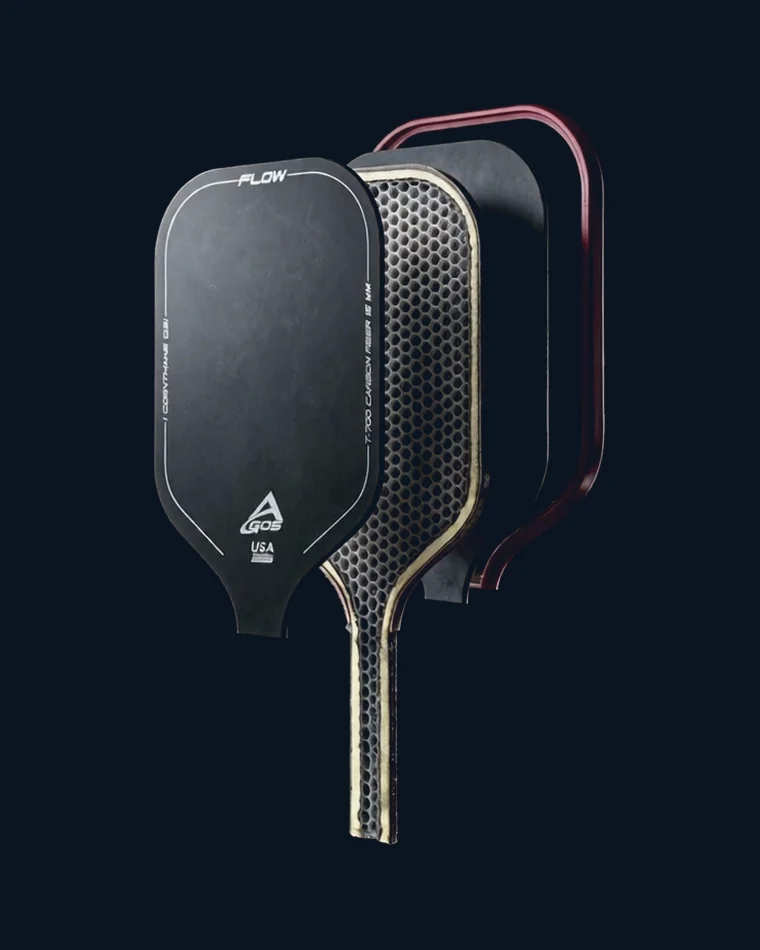
Flow · PP honeycomb core
Thermoformed polypropylene honeycomb, 16 mm. A celled core returns energy predictably and repeatably, which is what you want from an everyday paddle that has to feel the same on the last game as the first.
The Pocket™
Named for the pocket of a wave, the fastest and most powerful part of a break.
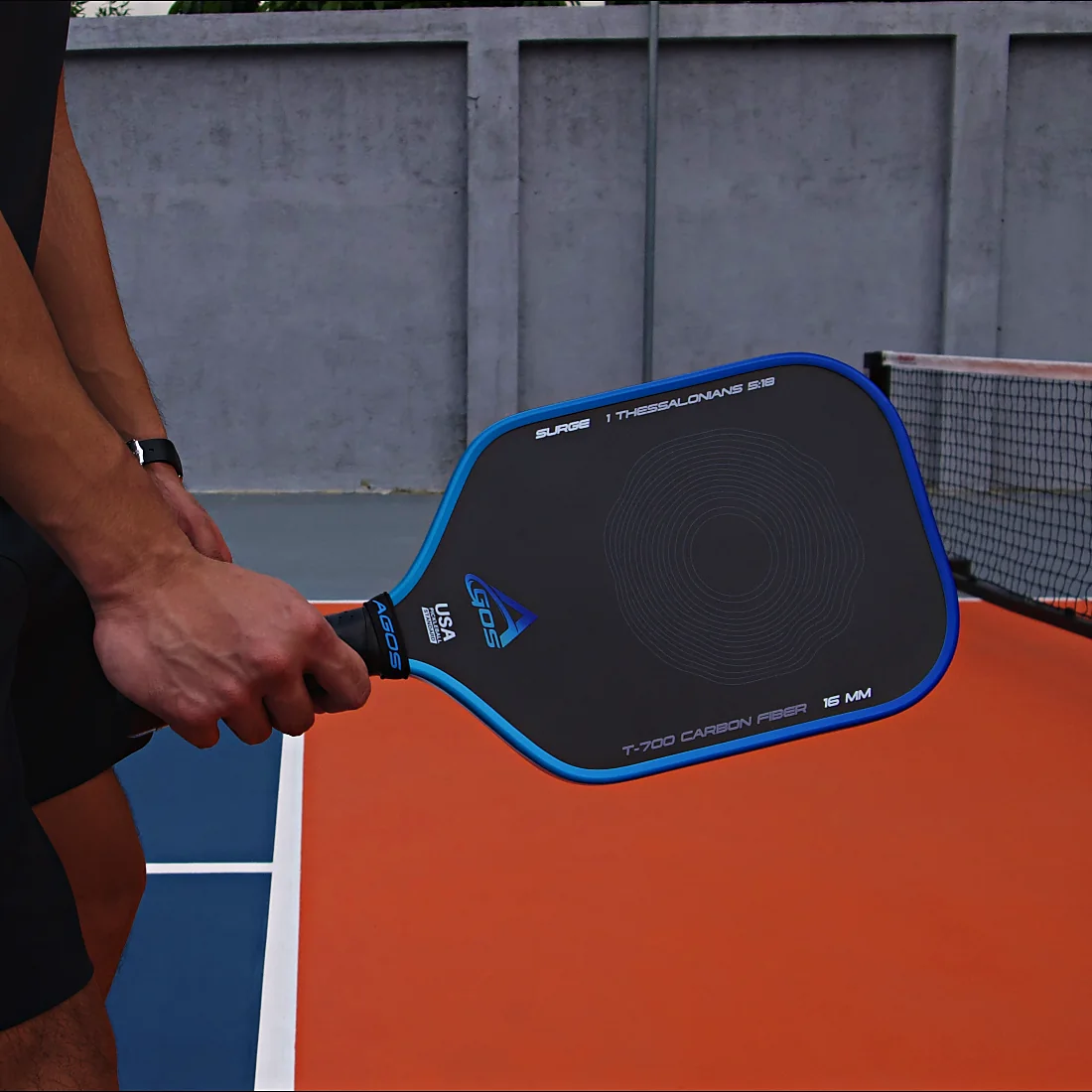
On the Surge, the EPP foam is tuned to a higher concentration through the centre of the face. That produces a zone with more pop and a cleaner feel on contact than the surrounding area, rather than a sweet spot that simply happens where the geometry puts it.
The concentric graphic printed on the face is not decoration. It is a reading tool. Ball marks show how tightly your contact is grouping, so you can see whether you are finding the centre or drifting off it. It reads from the sideline and on replay footage, which makes it as useful for a coach as it is for you.
- 01Tuned foam densityConcentration raised through the centre of the face
- 02Defined response zoneMore pop and a cleaner feel inside the ring pattern
- 03Visible feedbackContact marks group against the printed rings
- 04Readable on replayLegible from the sideline and in match footage
T-700 raw carbon
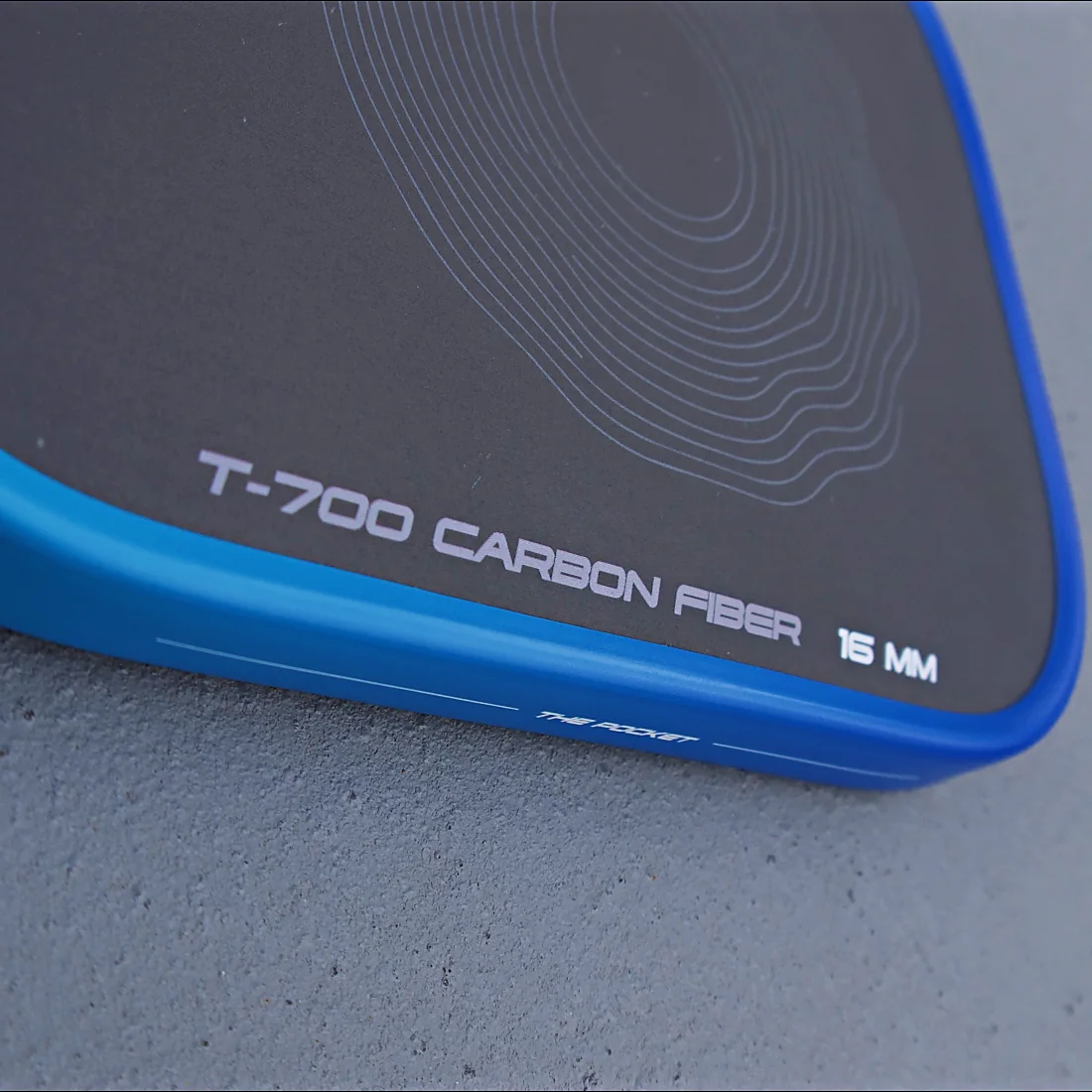
Both paddles use an unsanded T-700 carbon face. The peel-ply texture is left as it comes off the layup rather than being polished, which is what gives the surface its bite on the ball.
It is the same skin on all four paddles. Everything underneath it changes how the ball leaves. This is what it leaves from.
- Fibre
- Raw Toray T700, peel-ply
- Surface finish
- Raw peel-ply, unsanded
- Spin
- About 1,840 to 2,000+ RPM
- Surface roughness
- Under 40 microns maximum peak
- Core thickness
- 16 mm
Pressed right up to the USA Pickleball roughness limit the day it reaches you. Like any raw carbon face, the texture eases off over months of heavy play.
Where these are made
The paddles are manufactured to our specification by a factory that builds to the standard of the best paddle brands. We do not own a factory and we do not pretend to.
Ours
The brief. Shape, core, thickness, weight and intent. The face graphic, the printed verse, the colourways, and the tuned Pocket™ zone on the Surge. Which prototypes we accept and which we send back. What goes on this website, and who answers you when something fails.
The factory's
The construction itself: T-700 raw carbon layup, thermoforming, the unibody throat and handle, the tolerances they hold across every brand they build for, and their own quality control before a batch ships.
That split is why a Surge is ₱6,499 and not ₱14,000. The construction is the construction. What you are not paying for is a name that has been marked up around it.
USA Pickleball
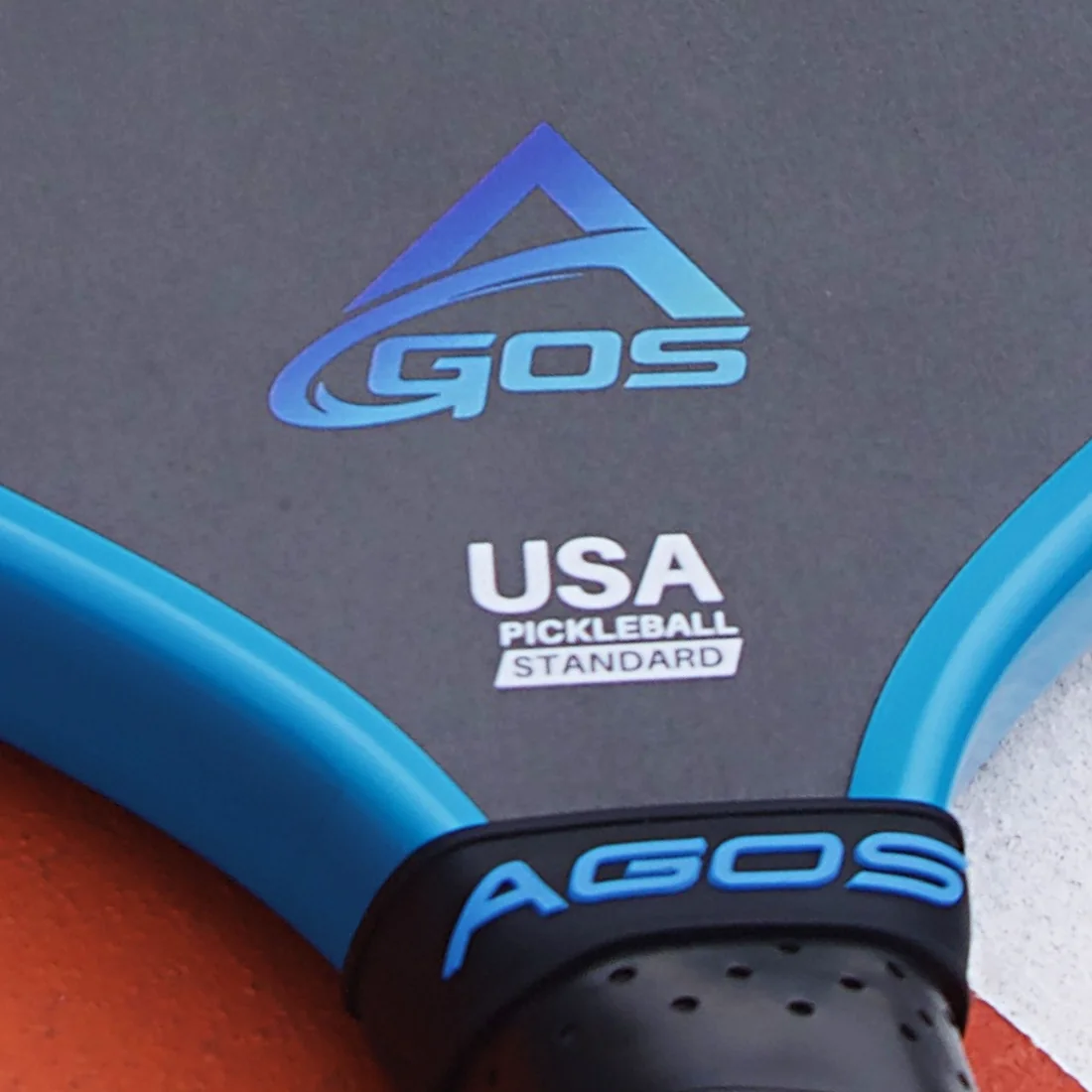
Both paddles are built to the USA Pickleball equipment standard, and both faces carry the USA PICKLEBALL STANDARD mark. Neither is on the USA Pickleball approved equipment list. Approval is a separate process, run by them and not by us, and we are going through it now.
- Length
- 412.17 mm (16.23 in) against a 17 in limit
- Length plus width
- 23.58 in against a 24 in limit
- Thickness
- 16.4 mm, no dimensional limit applies
- Approval status
- In process, not yet listed
Compare the two


| Surge | Flow | |
|---|---|---|
| EPP foam | Core | PP honeycomb |
| EVA foam, a thick frame | Perimeter | EVA foam, a thin strip |
| T-700 raw carbon fiber | Face | T-700 raw carbon fiber |
| Elongated, 412.17 × 186.81 × 16.4 mm | Shape | Elongated, 412.17 × 186.81 × 16.4 mm |
| The Pocket™, a tuned foam zone | Sweet spot | Even across the face |
| 226 g ± 6 g | Weight | 222 g ± 6 g |
| ₱6,499 | Price | ₱3,499 |